Migration and the movement of peoples is a phenomenon that is as old as humanity itself. While persistent factors, such as conflict, continue to force people from their homes, climate change and other new drivers also fuel an increase in human mobility globally.
Today these old and new factors have created a shared context in which unprecedented numbers of people are moving across the world. Although international law is unequivocal that the enjoyment of human rights must not depend on one’s legal status, migrants often continue to face obstacles and hostilities.
Numerous dynamics, such as rising economic and social inequalities in many countries and the current rise in various forms of national populism, have contributed to the development of an often xenophobic and racist discourse about migration and migrants. Repressive policies and ‘security’ priorities are dominating State actions, largely with complete disrespect for the human rights obligations that these same States have committed to. In this environment, the rights of migrants are threatened.
While States did come together in an attempt to address these concerns, and adopted the Global Compact for Safe, Orderly and Regular Migration in 2018, the process and the Compact itself proved insufficient. The difficult negotiations and eventual adoption of this agreement very clearly exposed the many ‘myths’ and misrepresentations of migrants and of migration found globally. It further highlighted that the protection of human rights in the context of migration, even if reiterated as a general abstract principle, is still not the number one priority of many States when implementing border control or other sectorial policies.
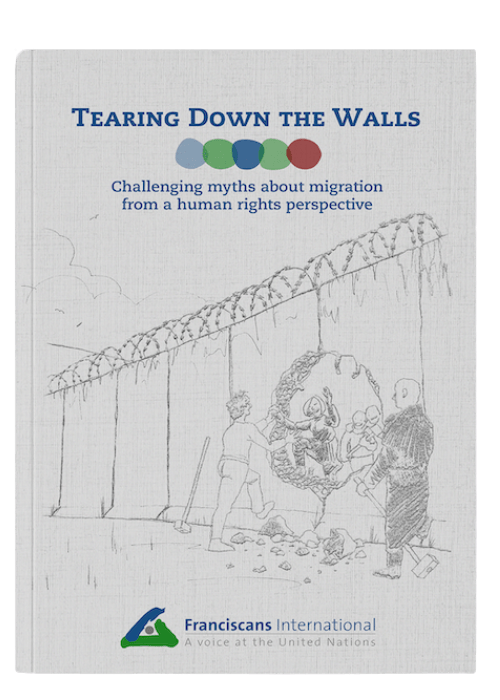
This publication aims at deconstructing predominant myths about migration and human mobility more generally, from a human rights perspective. In doing so, the paper reflects the lived experiences of Franciscans and our other partners who are focused on and support migrants, refugees, internally displaced persons, and victims of human trafficking. It also looks at binding human rights standards and the political commitments of States via the Global Compact on Migration. This paper is by no means exhaustive, neither in the myths or issues presented, nor of the international legal obligations that States have in regard to a particular issue.
Nevertheless, we hope that this publication may help Franciscans, other faith-based groups, and local civil society organizations to address and counter, with the general public and local authorities, misconceptions, xenophobic and racist discourses, and abusive policies on human mobility. Franciscans International underscores that States have legal obligations towards migrants’ rights that must be respected, protected, and fulfilled. Their rights, including their lives and safety, should not be subject to political currents.
Source: Franciscans International