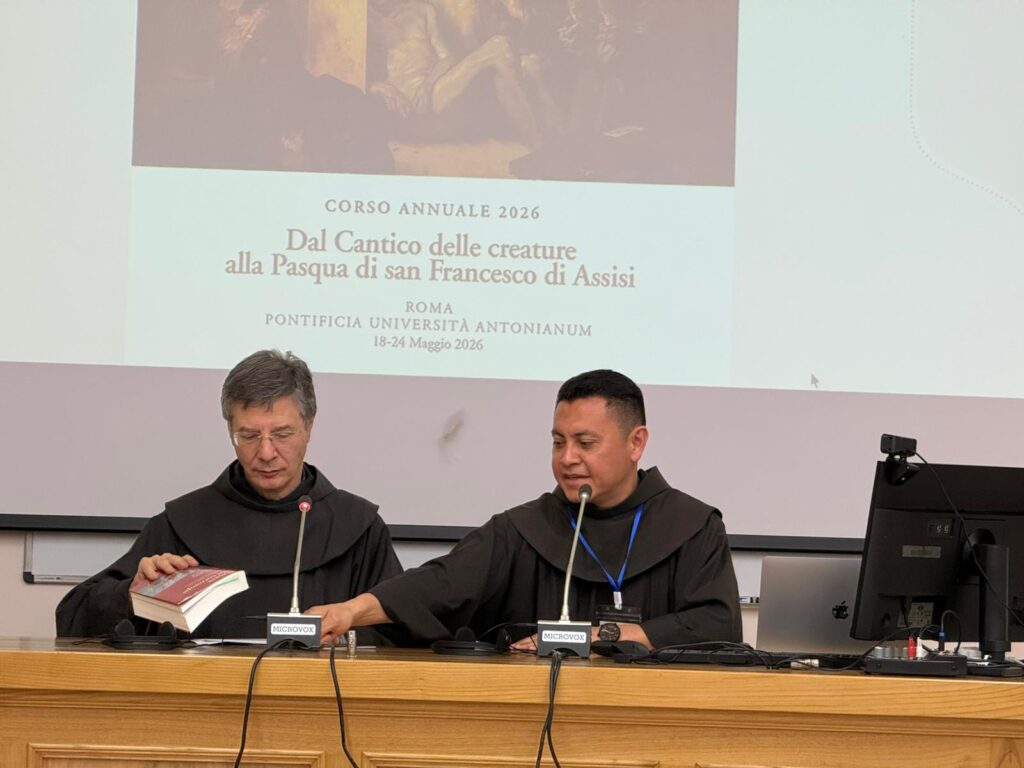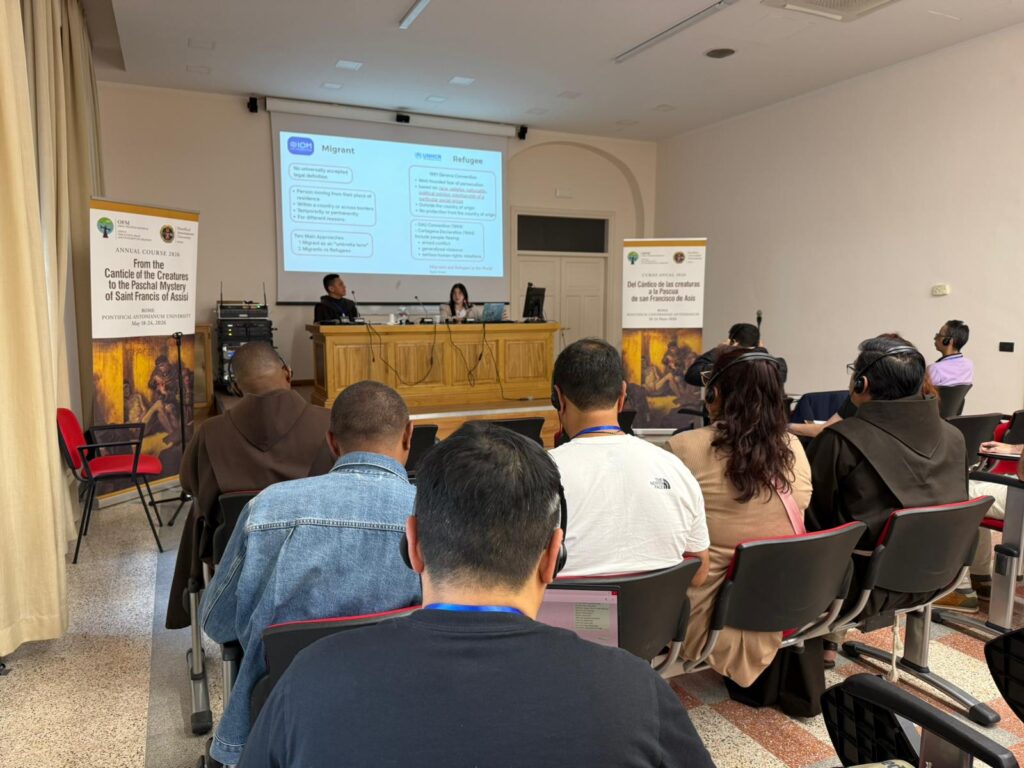
The International JPIC 2026 Course, organised by the General Office for Justice, Peace and Integrity of Creation (JPIC) of the Order of Friars Minor, began this Monday, the 18th May 2026, at the Pontifical University Antonianum with the theme: “From the Canticle of the Creatures to the Easter of St Francis.”
The gathering brings together approximately forty participants from various countries across four continents, including JPIC facilitators from the Order, lay people involved in Franciscan works, and visiting professors.
The course is being held in the context of the Franciscan Centenaries and seeks to explore, from an interdisciplinary perspective, contemporary challenges related to justice, peace, and the care of creation.
The opening session was moderated by Fr. Daniel N. Rodriguez Blanco, OFM, of the General Office for JPIC. The opening address was given by Professor Fr. Giuseppe Buffon, Rector of the Pontifical University Antonianum, who presented the university as the “common home of the Franciscan family” and as a cultural project open to the public, capable of articulating reflection and action from the perspective of integral ecology. He also emphasised the need to build bridges between academia, Franciscan tradition, and society, promoting an interdisciplinary vision inspired by the spiritual legacy of Saint Francis of Assisi.
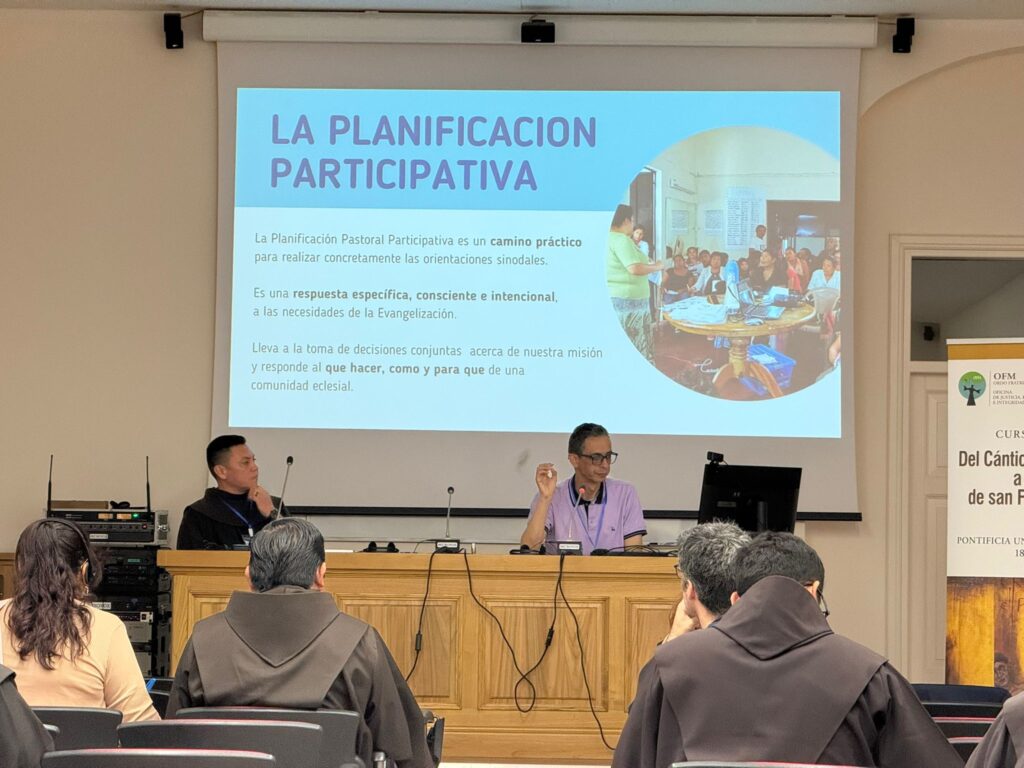
Subsequently, Miguel Ángel Jaimes presented an introduction to the foundations of participatory pastoral planning, understood as a practical path for implementing synodal guidelines in ecclesial life and in JPIC (Joint Pastoral Care) animation. He also pointed out some challenges, such as clericalism, authoritarianism, and individualism, proposing a synodal, missionary pastoral approach committed to social and ecological realities.
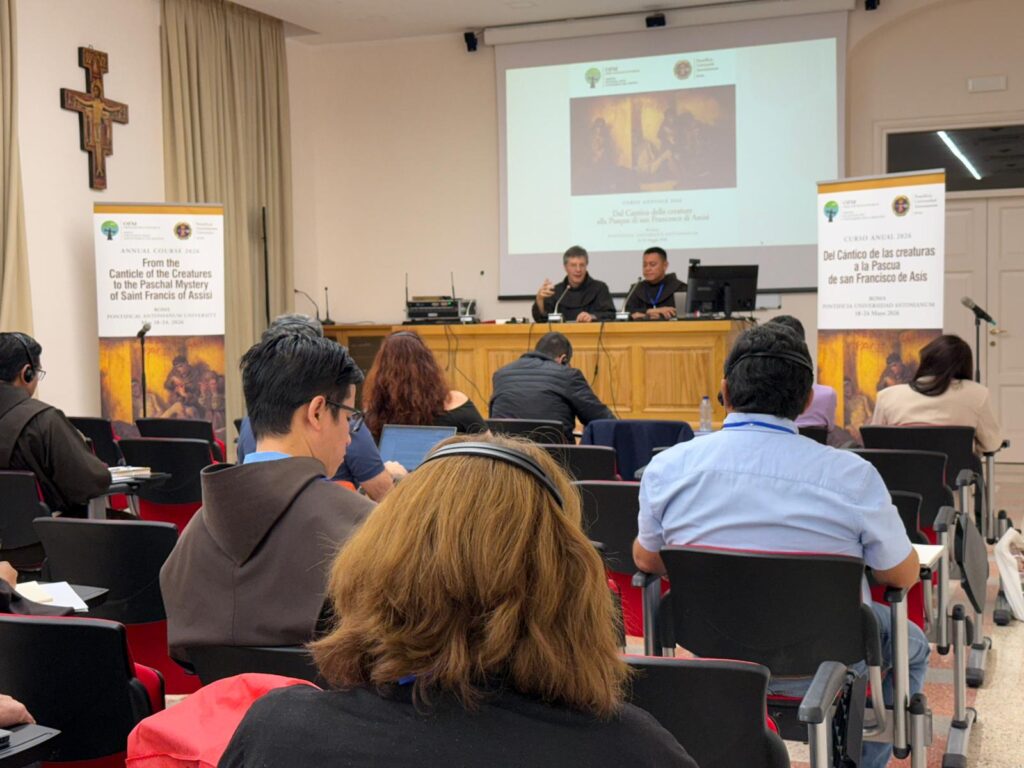
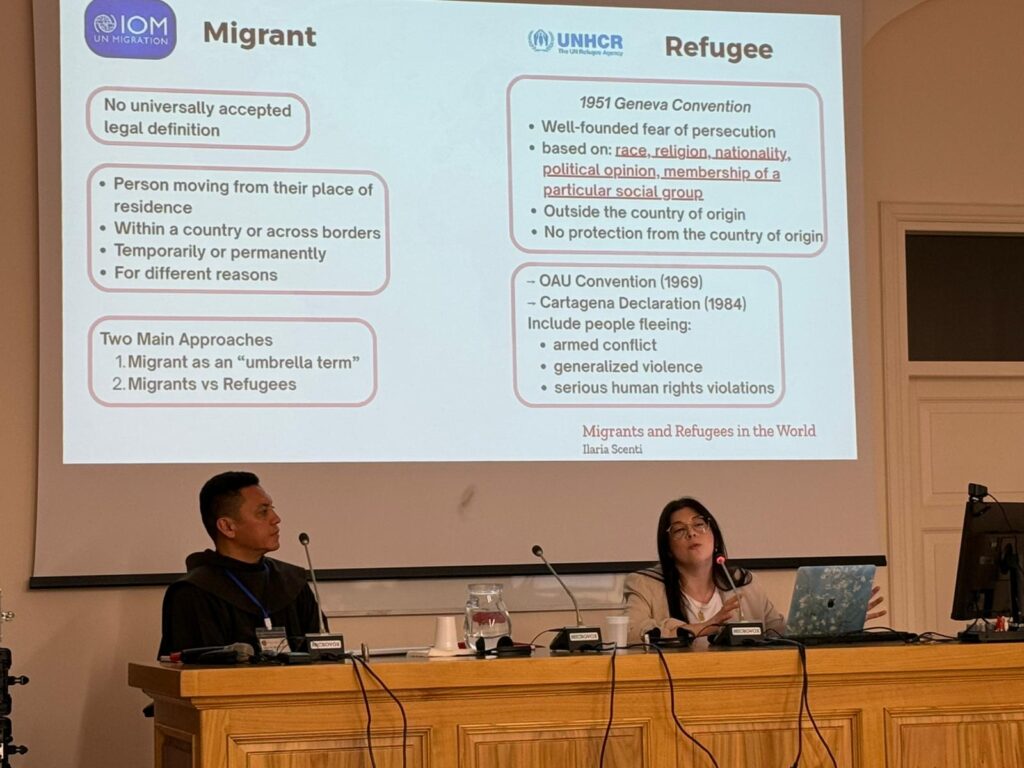
The discussion continued with Ilaria Scenti’s presentation on migrants and refugees worldwide. The presentation addressed the legal and human differences between migrants, refugees, asylum seekers, and internally displaced persons, as well as the multiple causes of contemporary migration: economic, socio-political, and environmental. It also delved into major current humanitarian crises, such as those in Venezuela and Sudan. Migration routes, especially those across the Mediterranean, were also analysed.
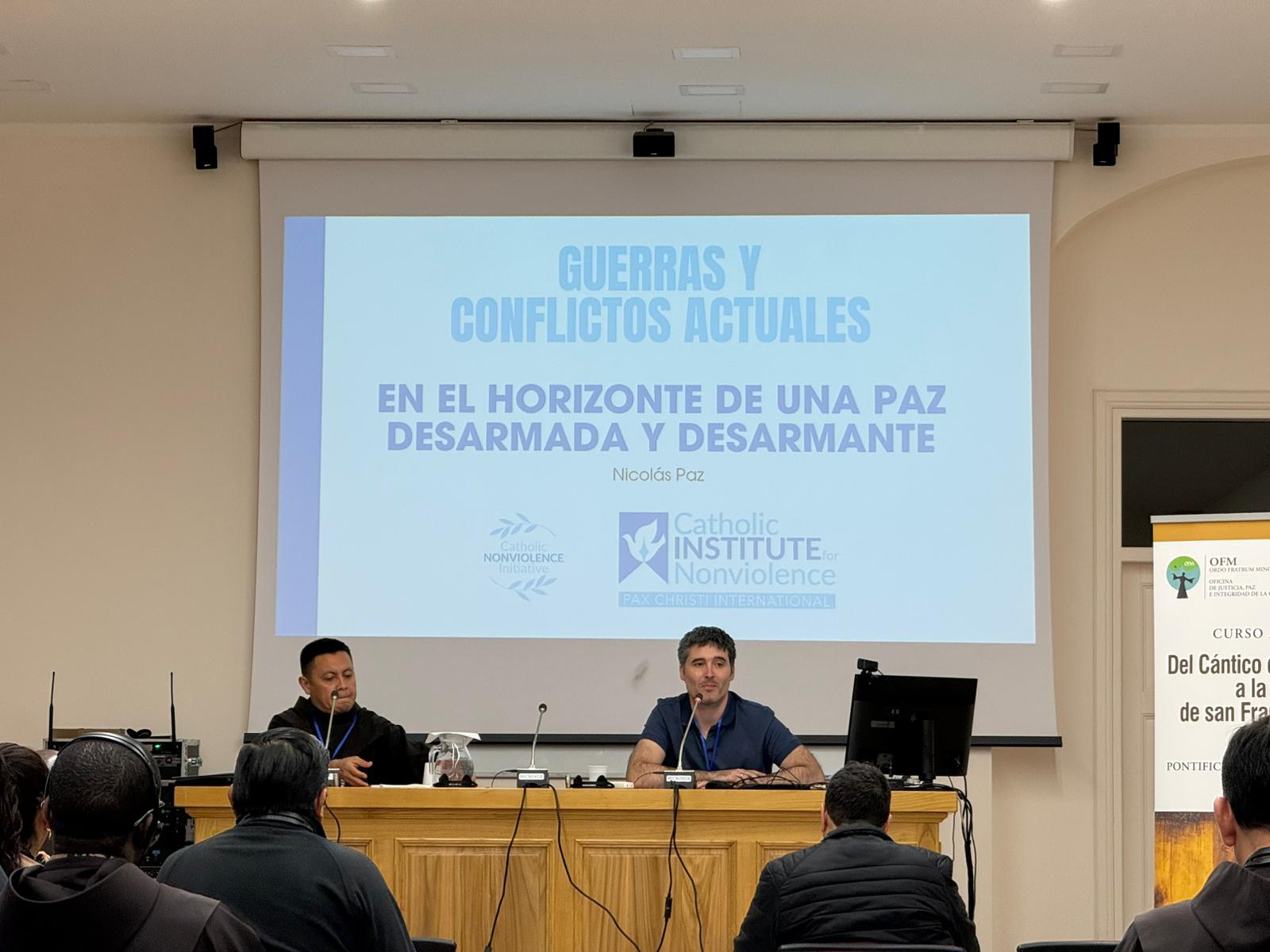
In the afternoon, Nicolás Paz, from Pax Christi International, presented the lecture “Current Wars and Conflicts: On the Horizon of a Disarmed and Disarming Peace,” in which he proposed a critical reflection on the contemporary dynamics of violence and war. Among other topics, he emphasised the need to unlearn culturally ingrained violent responses, recognise the biases that legitimise war, and rediscover nonviolence as a spirituality, a way of life, a method of social transformation, and a universal ethic. The event also addressed issues such as increased military spending, the privatisation of violence, the structural causes of conflict, and the challenge of building an embodied hope through political action and the Gospel.
The day concluded with the documentary “The Letter,” which focuses on the current ecological crisis and the call in the encyclical Laudato si’ for integral ecological conversion, highlighting our shared responsibility for caring for our common home and the urgent need to listen to both the cry of the earth and the cry of the poor.
The JPIC 2026 International Course will continue in the coming days with various conferences, dialogue sessions, and exchanges of experiences aimed at strengthening the Franciscan commitment to justice, peace, and the integrity of creation.