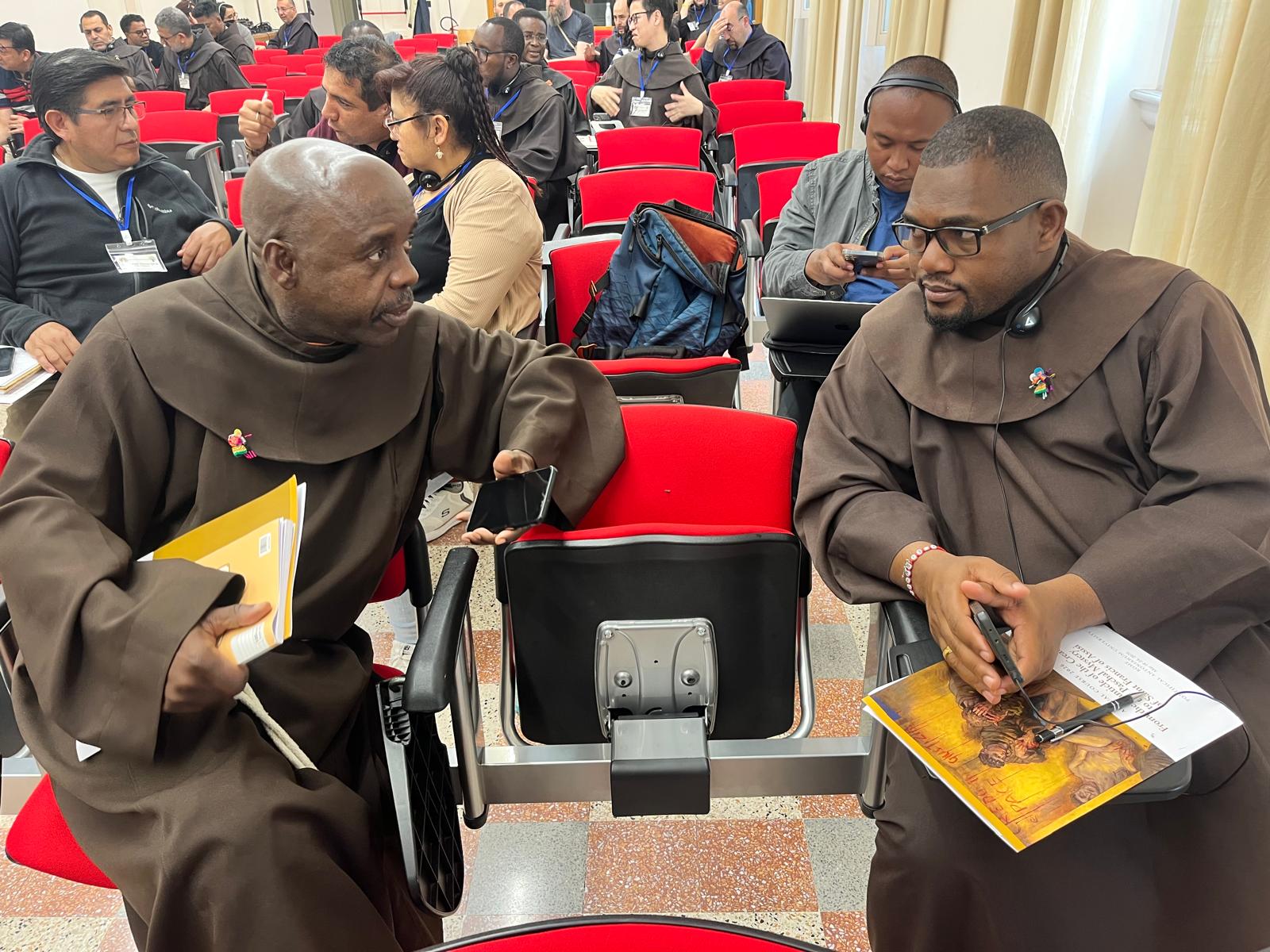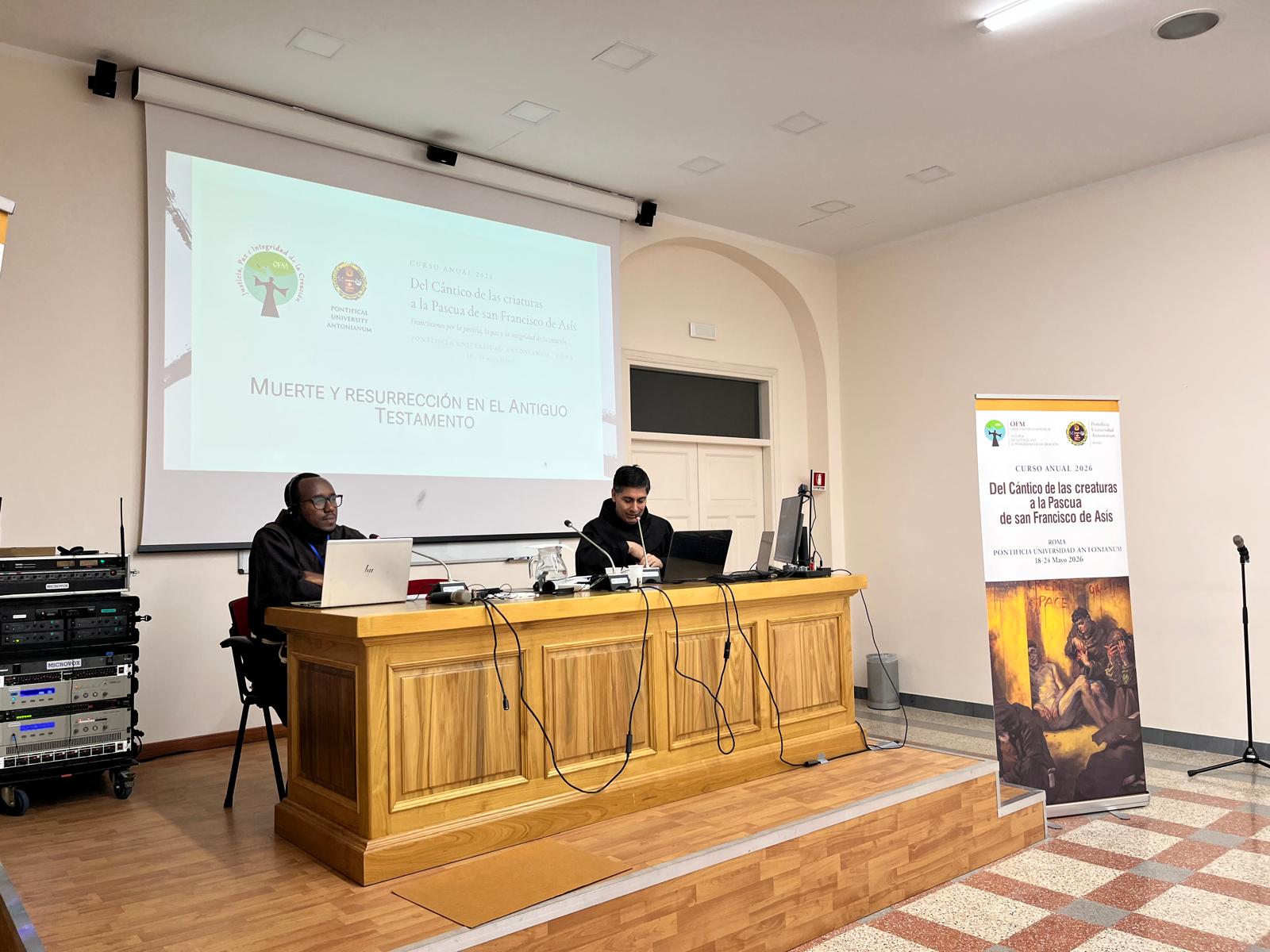
The JPIC 2026 International Course, “From the Canticle of the Creatures to the Easter of St Francis of Assisi,” organized by the General Office for Justice, Peace, and Integrity of Creation in collaboration with the Pontifical University Antonianum, continued its activities, delving into the biblical, pastoral, and testimonial dimensions of the Franciscan mission in today’s world. During the second and third days, participants reflected on the passion, death, and resurrection from the perspective of the Old and New Testaments, listened to missionary experiences from Turkey and the Holy Land, and explored the human, spiritual, and pastoral profile of the JPIC animator.
The sessions were marked by a strong biblical and theological context. Fr. Gonzalo Collipal Osses, OFM, presented a reflection on death and resurrection in the Old Testament, highlighting the progressive development of biblical hope and its ethical and communal dimensions. His presentation showed how faith in God’s ultimate victory over death also becomes the foundation of a culture of justice, care, and hope for our time.
Subsequently, Fr. Elton Viagedor, OFM, delved into the passion, death, and resurrection of Jesus in the New Testament, emphasizing that the core of Christ’s mission is the proclamation and inauguration of the Kingdom of God as a reality of justice, peace, solidarity, and liberation for the poor and excluded. From this perspective, the JPIC mission was presented not only as social action but also as concrete participation in the Paschal Mystery of Christ and in the historical building of the Kingdom.
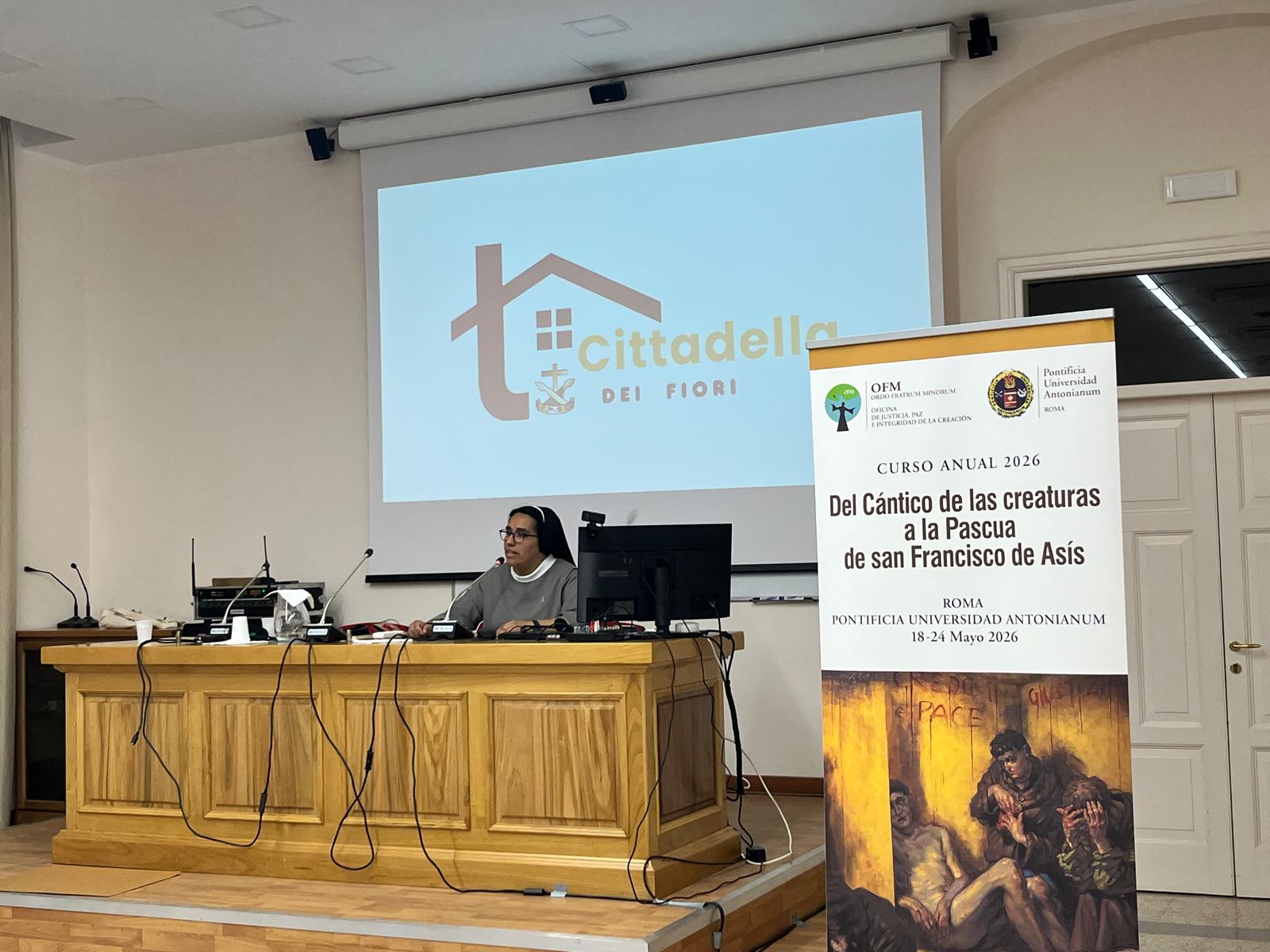
One of the most significant moments of the course was the time dedicated to sharing experiences from Turkey and the Holy Land. Sr. Miriam Oyarzo Gavilán, a Franciscan missionary of the Sacred Heart serving in Büyükada, Turkey, offered a moving testimony about her work with migrant women, refugees, and vulnerable people in a context marked by the migration crisis, social tensions, and the invisibility of many victims of violence and exclusion. She presented the “Cittadella dei Fiori” project as a concrete response of welcome, listening, and accompaniment.
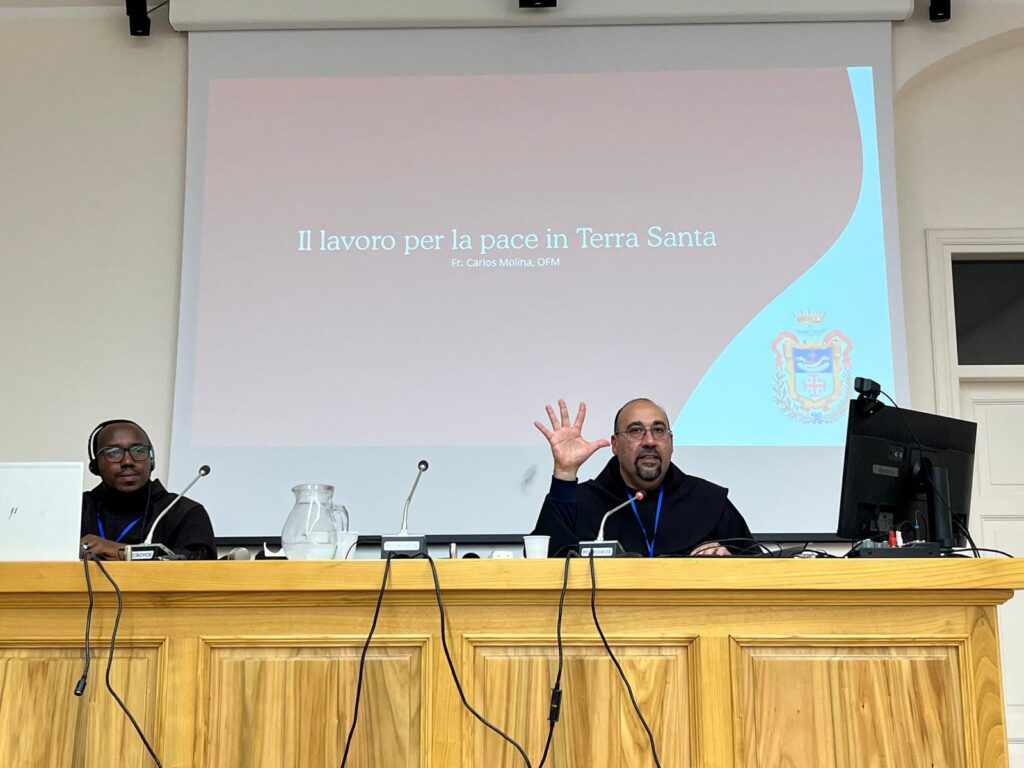
For his part, Fr. Carlos Eduardo Gabriel Molina Nicoli, OFM, shared a reflection on peacemaking in the Holy Land, describing the religious, cultural, and political complexity of the Middle East. His presentation showed how building peace requires a deep understanding of the historical wounds, cultural identities, and conflicts that permeate the region. At the same time, he emphasized that Franciscan spirituality has been, and can be even more so, a path of dialogue, reconciliation, and defence of human dignity amidst scenarios marked by violence and polarization.
Furthermore, the profile and mission of the JPIC animator were addressed in a presentation given by Fr. Daniel N. Rodríguez Blanco, OFM, Director of the JPIC General Office. Drawing on a Franciscan interpretation of following Jesus, he emphasized that JPIC service stems, first and foremost, from an experience of God and a concrete vocation to discipleship. The JPIC animator was presented as a brother or sister called to live the Gospel through fraternity, humility, reconciliation, justice, and care for creation.
Some temptations that can affect JPIC service were also discussed, such as evading the mission, messianism, and pessimism, with an emphasis on the need to cultivate an incarnate spirituality, capable of listening to people’s suffering and responding with evangelical hope.
The course also included guidance from Miguel Ángel Jaimes in addressing specific challenges in pastoral work. Through a participatory methodology, participants identified real challenges present in their local contexts and reflected on processes of discernment, analysis, and the search for community-based pastoral responses. The tool presented helped to recognize indicators, causes, and possible courses of action in the face of situations that hinder the evangelizing mission and JPIC service.
The JPIC 2026 International Course thus continues to consolidate itself as a space for Franciscan formation, dialogue, and discernment in the face of the great challenges of the contemporary world, helping JPIC leaders renew their commitment to justice, peace, and the integrity of creation from the spirituality of the Gospel and the witness of St Francis of Assisi.